Week 4: Medicine, Technology, and Art
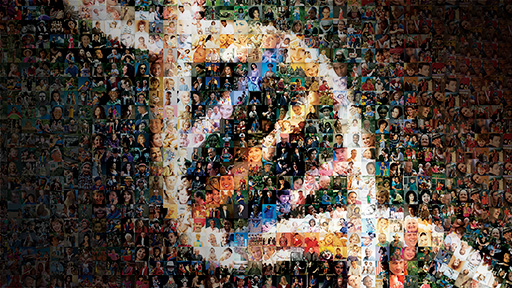
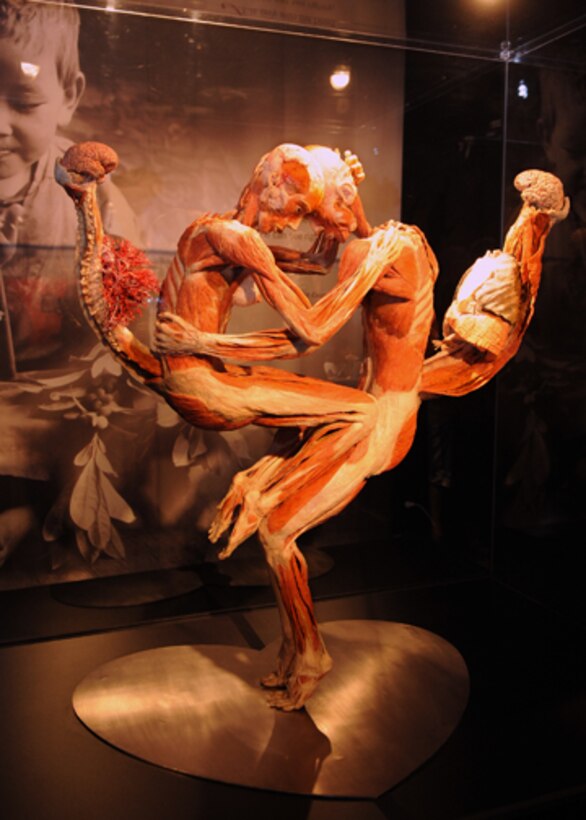
This week we looked the intersections of medicine, technology, and art. We started off in lecture one we discussed how the acceptance of human dissection made way for not only a succession of medical advancements, but for the representation of the human body in art as well. Perhaps one of the greatest medical outcomes of the taboo removal regarding the study of the human body was the Human Genome Project. The Human Genome Project which determined the entire human DNA sequence, base pair by base pair. The first working draft of the human genome sequence was actually assembled at UC Santa Cruz, one of our sister campuses! An impressive feat that was largely made possible by the study of the human body which showcases the subject in an artistic form is the Body Worlds exhibition, which celebrates the human body using authentic specimens. I actually had not heard of this exhibition before this course, and was surprised, yet intrigued, when learning about this exhibition. I think it is a beautiful medium between science and art, showcasing how the overlap.

The second lecture built upon the earlier concept of science and art colliding, especially in relation to technology. Lecture two analyzed how medicine at one point was considered an art, and if you used tools technology, you were not really considered a doctor – a vastly different viewpoint than is considered today. This shows how societal attitudes are everchanging, and current perspectives about science and art being completely separate cultures in the future may very well change in the near future.
I also examined The Hippocratic Oath by Hippocrates and learned how it set a standard for the obligations and responsibilities for medical practitioners, especially regarding ethics. Lastly, I enjoyed reviewing The Architecture of Life by Donald E. Ingber. I was fascinated by the idea of “tensegrity” which is the idea that cells are able to maintain stability, despite their size, due to their biological design. I find this really interesting especially when I think about what I learned in biology about cell shape and structure, and then learning about the amazing functions of our body in physiology. These medical technologies are also fascinating to me especially when I consider medical tools that allow you to study the brain, such as fMRI and EEG, because I hope to have a career as a neuroscientist.
References
Glass, Marcy. Buckley Space Force Base, https://www.buckley.spaceforce.mil/News/Article-Display/Article/323088/discover-denver-gunther-von-hagens-tells-the-story-of-the-heart/. Accessed 28 Apr. 2023.
Hippocrates. The Hippocratic Oath. 5th century B.C.
Ingber, Donald E. The Architecture of Life. 1998.
Krochak, Tim. Saltwire, 27 Jan. 2023, https://www.saltwire.com/atlantic-canada/news/nova-scotia-museum-unveils-graphic-glimpse-into-human-body-100818461/. Accessed 28 Apr. 2023.
Larive, Cynthia, and Lori Kletzer. “UCSC Helps Produce First Truly Complete Sequence of a Human Genome.” UC Santa Cruz News Center, 31 Mar. 2022, https://news.ucsc.edu/2022/04/complete-human-genome-sequence.html#:~:text=UC%20Santa%20Cruz%20has%20a,of%20human%20biology%20and%20disease. Accessed 28 Apr. 2023.
National Human Genome Research Institute. “The Human Genome Project .” The Human Genome Project, https://www.genome.gov/human-genome-project. Accessed 28 Apr. 2023.
Vesna, Victoria. “Lectures Part 1.” Unit 4. 2023.
Vesna, Victoria. “Lectures Part 2.” Unit 4. 2023.
von Hagens, Gunther. “Body Worlds - Take an Eye-Opening Journey under the Skin!” Body Worlds, 2 Feb. 2022, https://bodyworlds.com/.
Awesome post, Anna. I enjoyed your connections to the human genome project. I also was fascinated by Ingber's idea of tensegrity and the apparent order at the smallest scales of reality. Medicine and science are in fact arts and you made this clear here!
ReplyDelete