Week 7: Neuroscience + Art
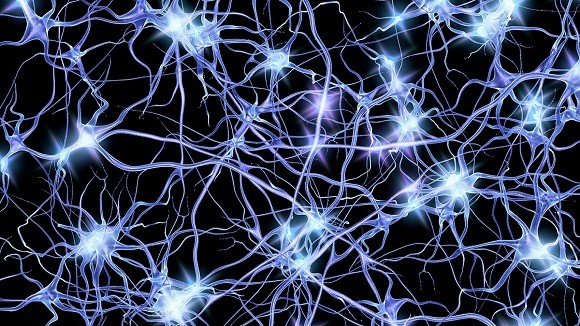
Being a Psychological and Brain Sciences major, I’ve been looking forward to this week’s content the most ever since I read the syllabus. I really enjoyed the Brief History of Neuroscience slide in lecture 1 because it encompassed so many things I learned in my career so far about psychology and neuroscience, and even more things that I’m excited to specifically learn more about. For example, I was just learning about Broca’s area in the first few weeks of my Cognitive Psychology class; The midterm that I took today was on working memory and long term memory. Psychology is so fascinating because it attempts to understand our very being, our own consciousness. As detailed in lecture 2, Sigmund Freud paved the foundation for studying consciousness. We may disregard some of his sexually outlandish theories today, but much of his work still retains a purpose today, such as the idea of the unconscious mind.
.jpg)
Speaking of consciousness, one item that I was reminded of while watching the lectures comes from my Evolution and Animal Physiology for Brain Sciences class that I took this winter quarter. We read the article Evolution of the Brain and Intelligence by Harry J. Jerison, which details how consciousness came about as almost a byproduct of survival, as nocturnal animals needed to be aware of themselves and their surroundings, especially when it came to predators. With awareness of the self came consciousness.

One last concept for this week I found so interesting was the idea of Brainbows. I remember looking at cell staining in biology and physiology from a purely scientific perspective, to be able to study cells, but never realized how beautiful and artistic the process actually looked. These brainbow images are so beautiful and it’s amazing how they are able to capture where neuroscience and art meet so perfectly. Overall this week’s content was by far my favorite!
References
Cherry, Kendra. “The Structure and Levels of the Mind According to Freud.” Verywell Mind, 27 Feb. 2023, www.verywellmind.com/the-conscious-and-unconscious-mind-2795946.
Dunn, Greg. “Brainbow Hippocampus in Color.” Gregg Dunn Design, https://www.gregadunn.com/product/brainbow-hippocampus-in-color/. Accessed 18 May 2023. (image citation)
Halberstadt, Max (c. 1921). "Sigmund Freud, half-length portrait, facing left, holding cigar in right hand". Library of Congress. Archived from the original on 28 December 2017. Retrieved 8 June 2017. (image citation)
Jerison, Harry J. “Evolution of the Brain and Intelligence .” JSTOR, 3 Sept. 1975, www.jstor.org/stable/2741455.
Nelson, Roger. “Global Consciousness Project: Introduction.” Princeton University, noosphere.princeton.edu/gcpintro.html. Accessed 18 May 2023.
Science Photo Library - PASIEKA/Getty. Nature Scientific Reports, https://www.nature.com/collections/fcajfbdbba. Accessed 18 May 2023. (image citation)
Vesna, Victoria. “Lecture I.” Neuroscience + Art. 2023.
Vesna, Victoria. “Lecture II.” Neuroscience + Art. 2023.
Hi Anna! I was really interested by this weeks readings as well. I think learning about how the mind works in different ways is so fascinating, but there is also so much more to it that I didn't realize. I like how you discussed the idea of Brainbows because it really is such a beautiful process to look at. I also find EEG to be a crazy idea in itself, but also the help that it provides for people that need it. The technology that we use nowadays, especially with the brain, has also been so mind boggling to me. It is also crazy to think that our brains control everything we do, therefore all of the scientific experiments and technologies that have evolved, is amazing. It's also interesting to read your post as a Psychological and brain science major and see your take on it!
ReplyDeleteHi Anna, thank you for sharing! I found the fact that our consciousness is a byproduct of our need for survival very interesting. It made me wonder if organisms like plants, even though they don’t have brain-like structures, have consciousness because they also have predators and the need to survive. If so, do they have a sense of the “self”? I think these are some interesting questions that both scientists and artists to explore!
ReplyDelete